Squirrel Point Light & How Tall Should A Lighthouse Be?
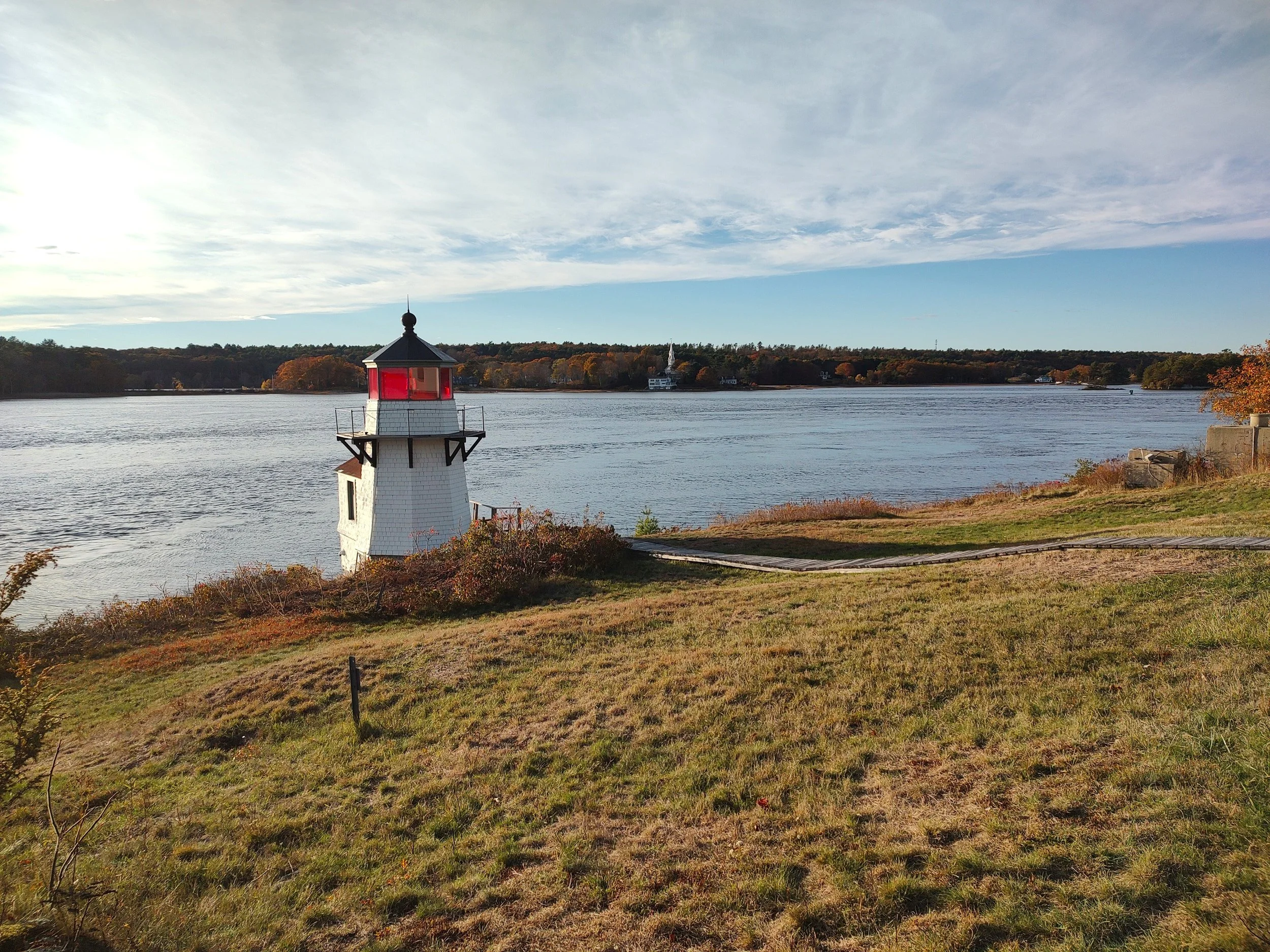
Squirrel Point Light
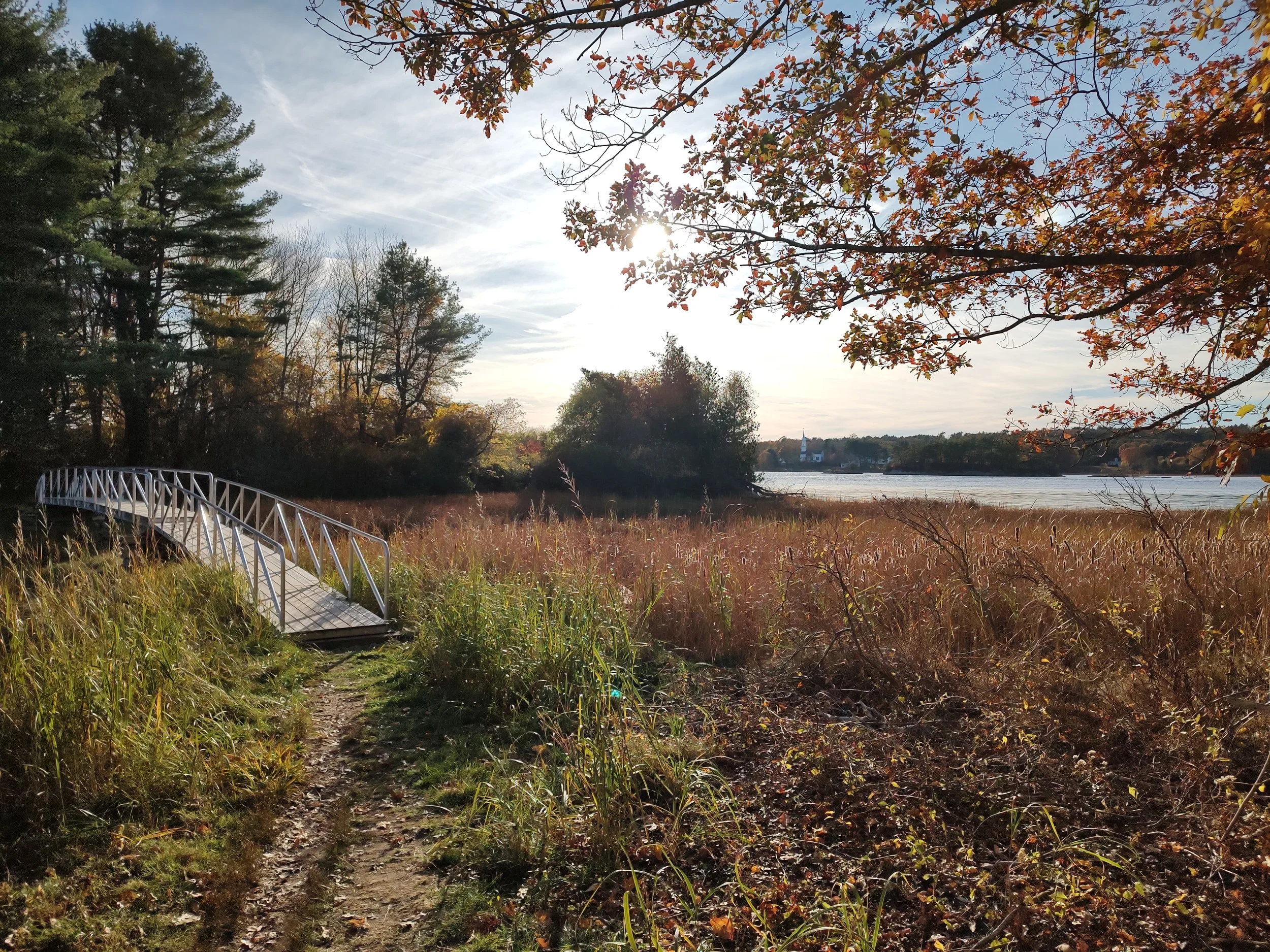
Balancing on plank boards that were thrown down on once muddy paths, I trekked through the coastal woods of Maine in my ongoing quest to visit more lighthouses. This particular 0.6 mile hike led me across sun-dappled footbridges and leaf-strewn dirt before arriving at Squirrel Point Light on the shore of the Kennebec River in Arrowsic.
Over 300 years ago, this location was once called Newtown. It had no lighthouse at the time, and instead, was a tiny settlement with only 41 residents and 20 soldiers that supplied sturgeon to Boston and timber to the British Royal Navy.
Squirrel Point was named after the frigate HMS Squirrel, which was the ship of Massachusetts Governor Samuel Shute. The HMS Squirrel was returning to Massachusetts after a bloody conflict with natives near Newton during August 1717, when turbulent currents ran it aground at what is now the site of the lighthouse.
When I finished my trek to the lighthouse, I was struck by the sight of it, and how it was one of the smallest ones I’ve ever seen.
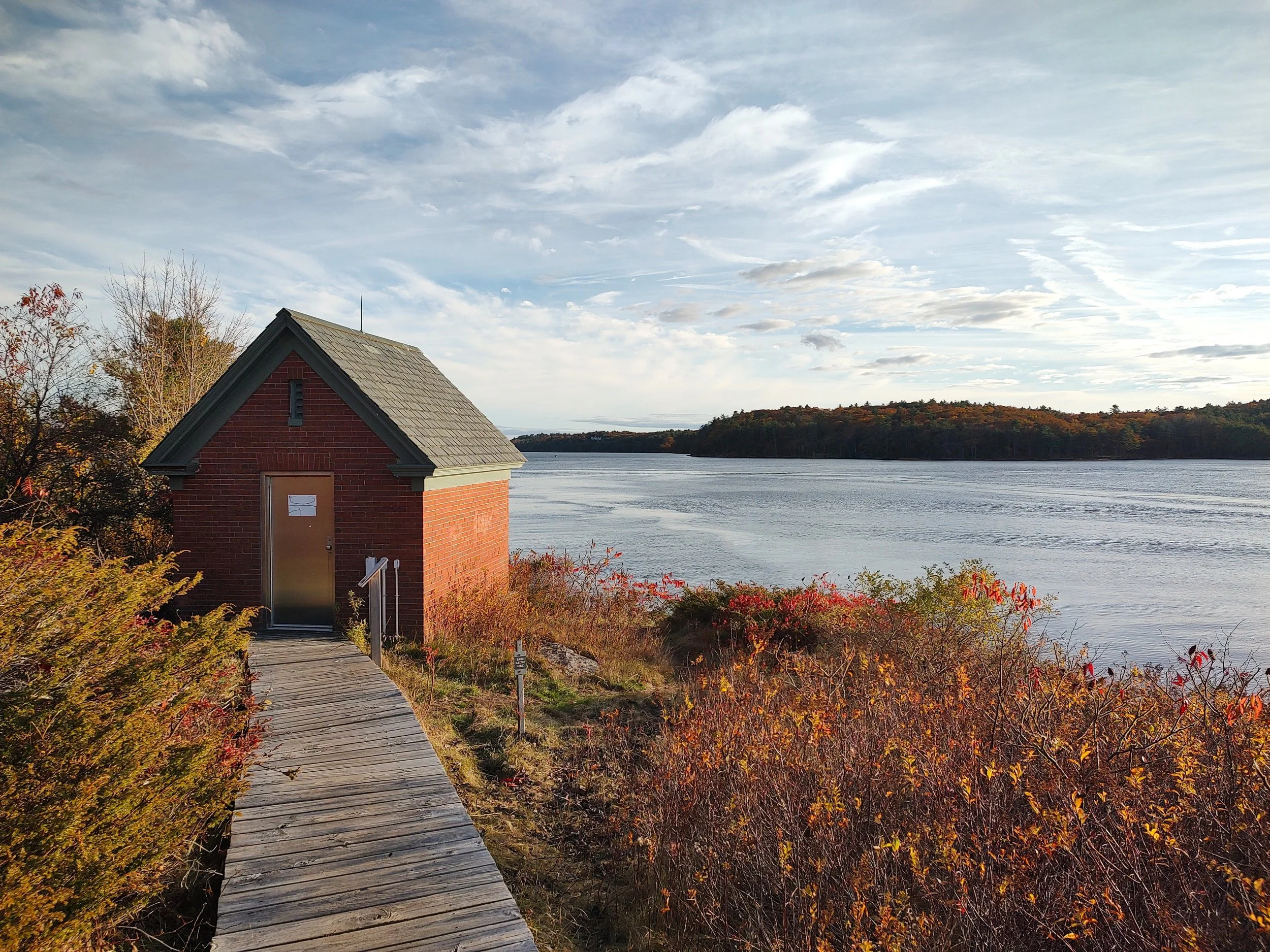
Squirrel Point Light stands at a modest 25 feet. For a frame of reference, most lighthouses range from 33 feet to 208 feet tall. This made me wonder… How tall should a lighthouse be?
Well, I did some research, and it turns out I was asking the wrong question, or at least, another question needed to be answered first: How far does the light need to be seen?
The height of lighthouses is dependent on its distance to the horizon. Some lighthouses, like Owls Head Light, are not built tall because they sit on cliffs, which add to their height. Other lighthouses, like the Portland Head Light, are built taller because the additional height is required for the light to reach far enough to actually serve as an effective navigational aid.
As someone who doesn’t spend a lot of time on boats, especially at night or during inclement weather, I’ve never once needed to use a lighthouse for a navigational aid. In all my visits to lighthouses, I started to see them like a tourist destination rather than a tool designed with an intended purpose. Squirrel Point Light is still actively used by people traversing up and down the Kennebec River, though admittedly, it’s not required to be useful when people like me visit it from land during a sunny afternoon.
Squirrel Point Light sits very close to the water. In fact, the river’s bank slopes gently downwards towards the lighthouse, leaving limited distance for the light to travel. Yet, its light doesn’t need to travel far compared to other lighthouses along Maine’s coastline. This lighthouse marks a bend in the river near sea level, and it’s one of four navigational aids constructed in 1898 to guide boats a mere 11 miles from the mouth of the river to the city of Bath, the shipbuilding center of Maine.
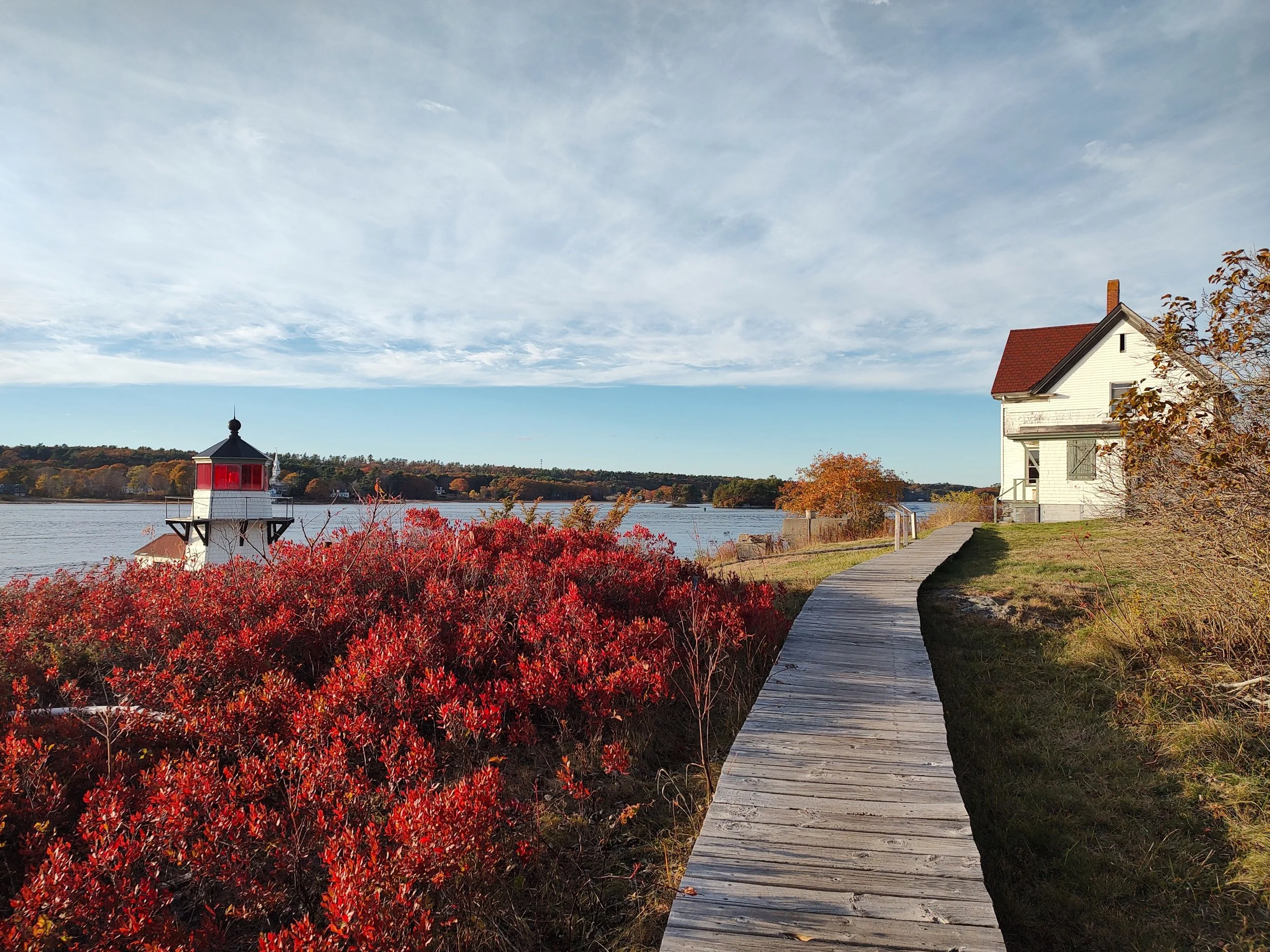
Squirrel Point Light and Keeper’s House
Keepers ran the lighthouse from 1898 until automation in 1981. In the late 1950s, the lighthouse became electric, then solar-powered in 2008. Although it’s owned by the Coast Guard, the lighthouse and keeper’s house are being restored and maintained by the non-profit Citizens for Squirrel Point, which depends on donations and volunteers—a common story for most of Maine’s lighthouses.
My journey back to my car was a quiet one, backdropped by the setting sun as the autumn days grew shorter and shorter. My quest for visiting lighthouses was over for the day but not for good, and as I clicked my seatbelt into place, I wondered what more I could learn from Maine’s coast.