Space and Dinosaurs
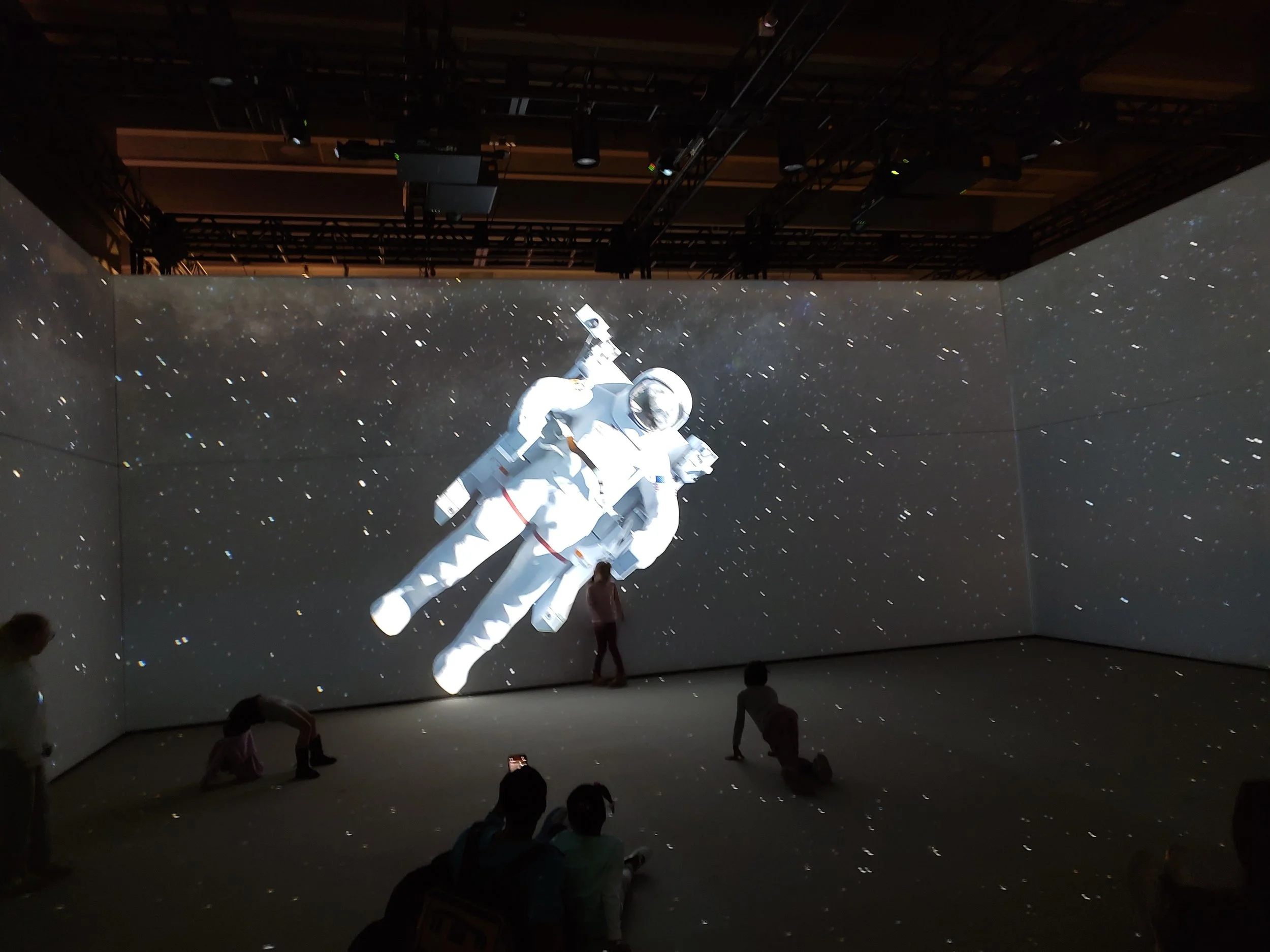
Small Immersive Room with Space Video
When I was 5 years old, I wanted to be a paleontologist. I loved dinosaurs and read so many books about them that I was asking for college-level encyclopedias for my 8th birthday, so that I—an 8 year old—could uncover the mystery surrounding their extinction. I was quite disappointed to learn only a few years later that scientists were fairly certain the extinction was the result of an asteroid colliding into modern day Mexico. My manila file folder filled with notes like “Disease?” and “Drought?” eventually made it into the trash, and I encountered a new special interest: mythology. The mysteries of human perseverance and faith dominate my curious mind to this day, and somewhere along the line, dinosaur fossils were replaced by other fossils: context clues to how people lived and why we live at all.
Similarly, I developed a fascination with deep space and the mysteries surrounding where we came from. In high school and college, I gravitated (pun intended) towards the big questions of life, working on a NASA funded research project connected to potentially identifying life on Jupiter’s moon Europa (they sent the clipper out a little over a year ago!) and working on a now-canned book about how we’re all literally made of stardust.
But the thing about growing older is that your interests change. Sometimes they grow and change with you and sometimes, for whatever reason, you leave them behind.
I’d be lying if I said I didn’t miss how deeply invested I was in dinosaurs and space. I used to know a lot about them, and there’s some mourning in letting go of a well-loved part of you, even if it was let go to make space for other well-loved parts.
Still, I think it’s worth honoring those parts, so for my birthday last month, I decided to spend the day revisiting those early childhood loves the best way I knew how: visiting the Museum of Science in Boston.
I’ve only visited the museum once before in February 2002, when I was still 5 years old. It’s safe to say that a lot of things have changed since then.
New to the museum since I last visited, are the immersive experiences, which include a video screening in a large, dome-like theater with a screen that stretched onto the ceiling. The experience was like riding an amusement park ride, the three-dimensional images surrounding me and giving me vertigo until I took a moment to look away. It was here that I learned about the James Webb Telescope.
The James Webb Telescope is the largest space telescope ever built, measuring 70 feet long x 47 feet wide x 28 feet tall. Its massive size meant that it was too big to fit into any available rocket, so NASA designed it to fold compactly into a launch vehicle rocket called Ariane 5 that was only 18 feet in diameter and 43 feet tall. As a result, the telescope had 50 major deployments with 178 release mechanisms that all needed to work properly. With a destination of around 1 million miles away from Earth, there was no possibility for a repair mission.
This part of the film moved me. NASA identified 344 points of potential failure, and on December 25, 2021, all 344 points were made successfully. I watched the tears of joy from engineers, physicists, and mathematicians—people who spent years of hard, diligent work to ensure that success was probable 344 times. The extent of human innovation astounds me. It is as infinite as our universe, and the film was a powerful reminder of that. The telescope continues to share stunning pictures from the outermost reaches of the universe, providing insights on every phase of the universe from the first luminous flows after the Big Bang to the formation of solar systems capable of supporting life. You can see some of the images it’s taken via this link.
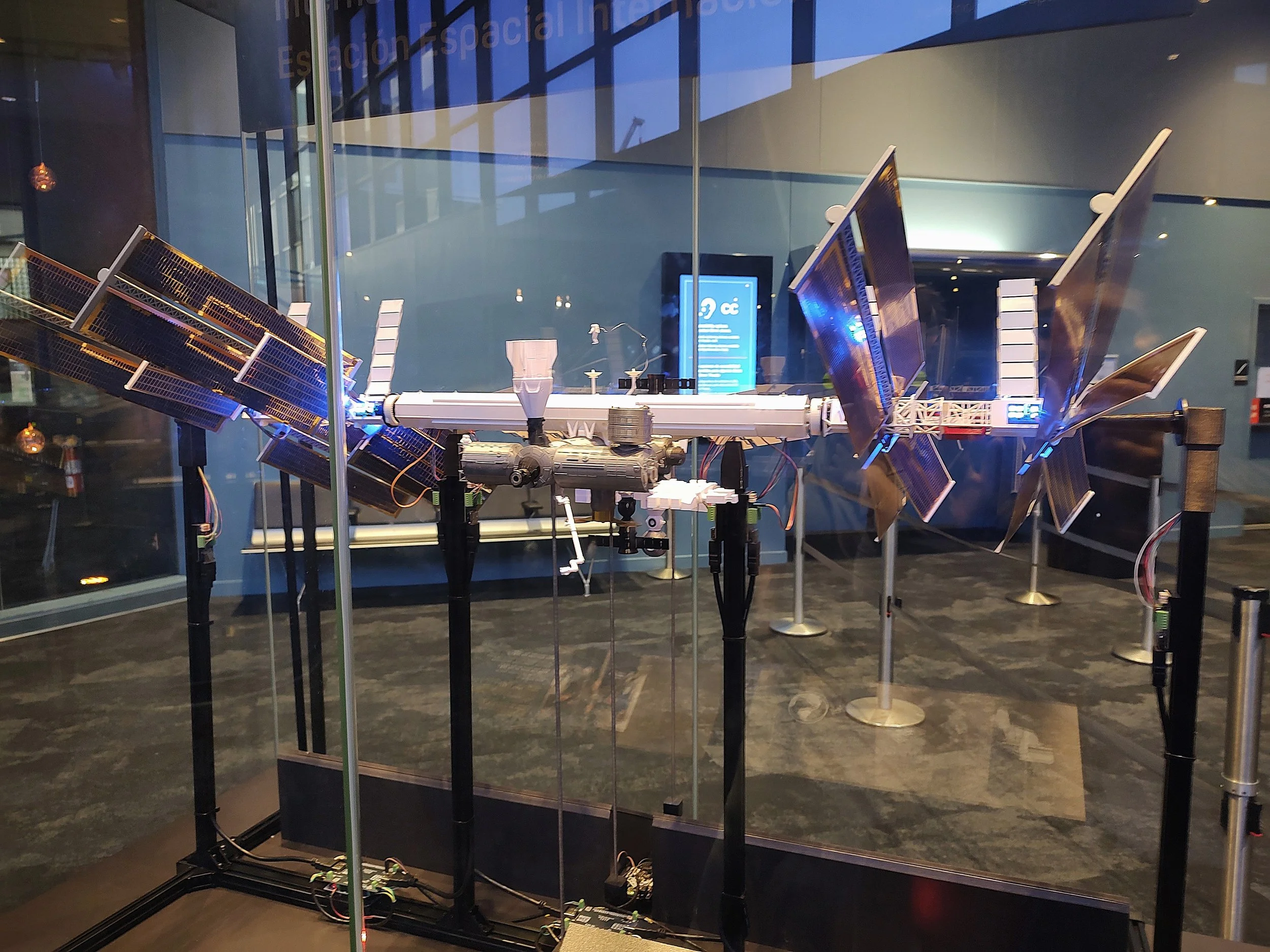
Outside this immersive theater was the space exhibit, featuring models of the planets and the international space station. The space station is only 250 miles from the Earth’s surface and completely orbits Earth in about 90 minutes. Over 280 people from 23 different nations have lived on it since 2000. The entire station is 358 feet long, just under the length of an American football field, and has massive solar panels that move as it circles the Earth to keep the station powered.
Very quickly after the space exhibit, I moved on to the fossil exhibits, which included a nearly complete triceratops skeleton that was donated to the museum only a couple years after I had made my initial visit.
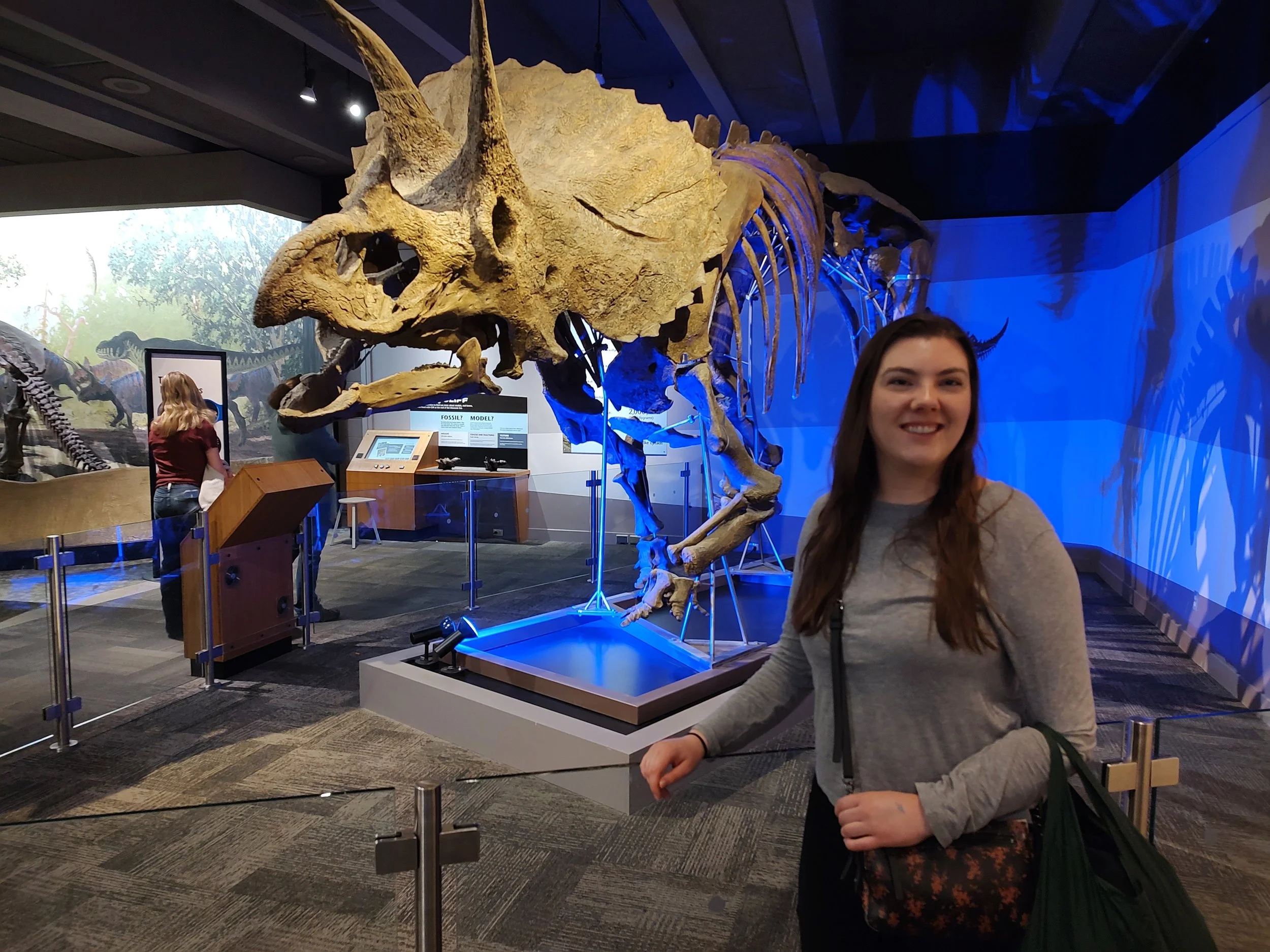
In 2004, paleontologists discovered a nearly complete triceratops skeleton in the Hell Creek Formation of North Dakota. The skeleton was named Cliff and loaned to the Museum of Science in 2008. A fundraising campaign that launched in 2014 raised enough donations to purchase Cliff. Cliff is estimated to have lived around the end of the Cretaceous Period 65.6 million years ago. He’s on the smaller side of his species at 22 feet long (average is 25 feet) and 9 feet tall. His skeleton weighs 2,000 pounds, with his skull totalling 800 pounds. He’s believed to have weighed 12,000 pounds when alive, fueled by a plant-based diet. Some paleontologists think the frill around his head and his horns protected the head and neck, while others add it probably helped regulate body temperature. The frill may have been used to attract mates like antlers in deer and elk are used today.
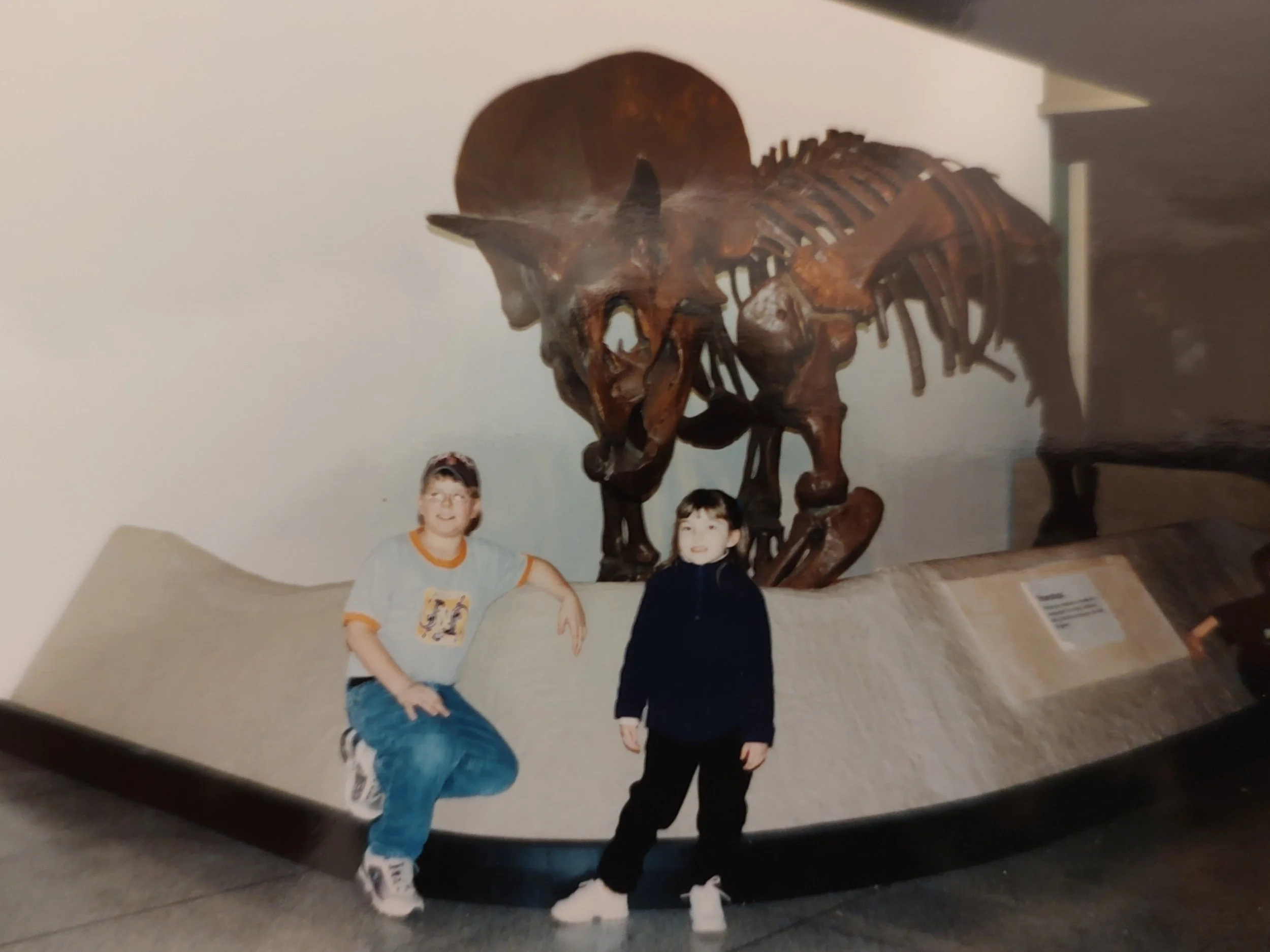
When I was 5 years old, I took a picture next to a triceratops model skeleton with my brother. 25 years later, I could take a picture next to the real thing. I laughed, commenting on how it seemed much bigger when I was younger, but to be fair, I was a lot smaller then.
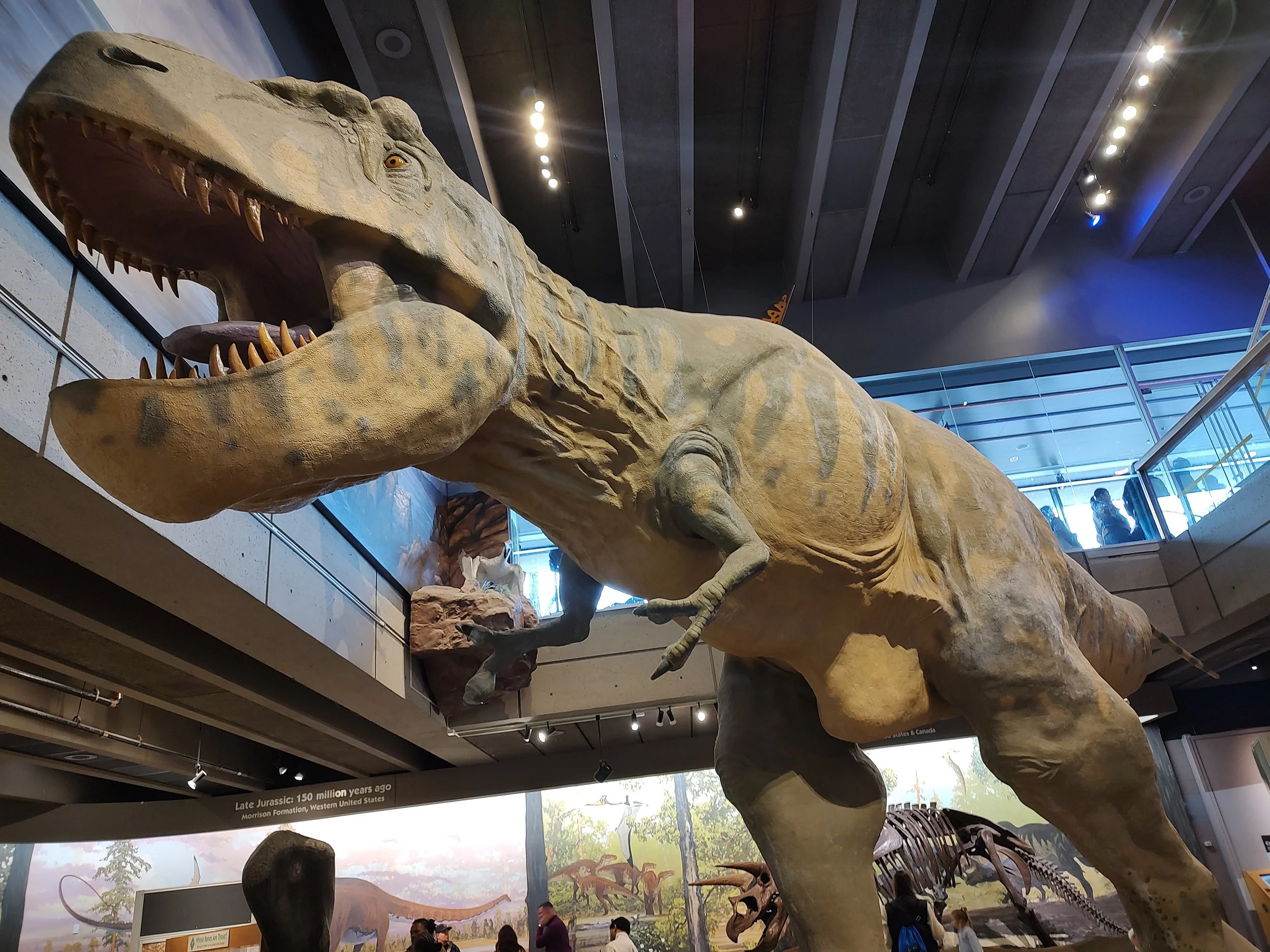
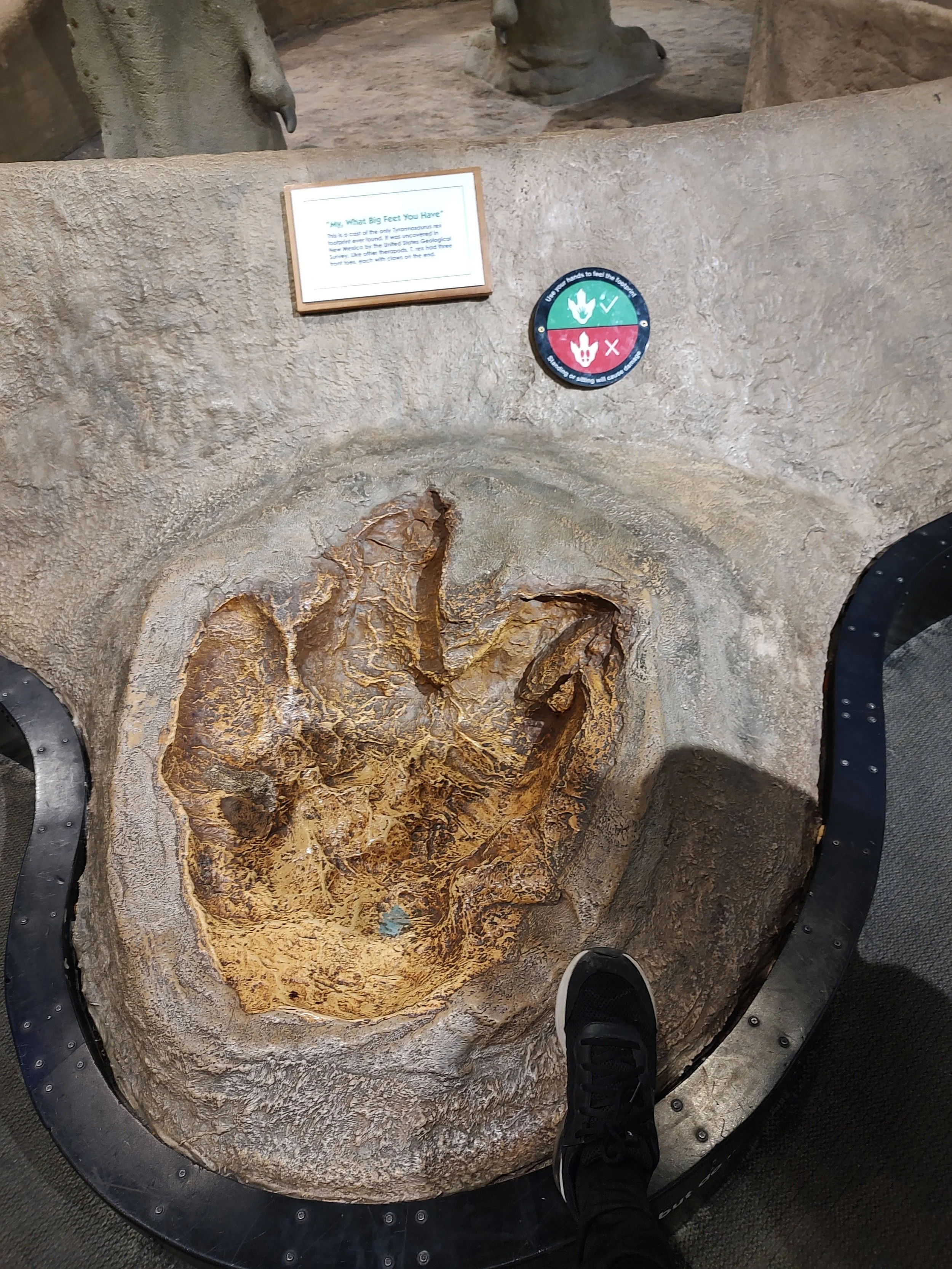
What hadn’t changed, was the life-size model of a Tyrannosaurus Rex. It towered over the rest of the room, around 40 feet tall. The museum’s T-Rex model is that of a male, which is believed to have a slightly smaller body than a female’s with more bony ornamentation on the head. Like Cliff, T-Rexes lived during the late Cretaceous Period, 68 to 65 million years ago, and bones have been found in Montana, Wyoming, Colorado, New Mexico, South Dakota, Western Canada, and possibly Mongolia and China. T-Rexes weighed 6 to 7 tons (12,000 to 14,000 pounds). Next to the model is a cast of the only T-Rex footprint ever found, uncovered in New Mexico by the United States Geological Survey.
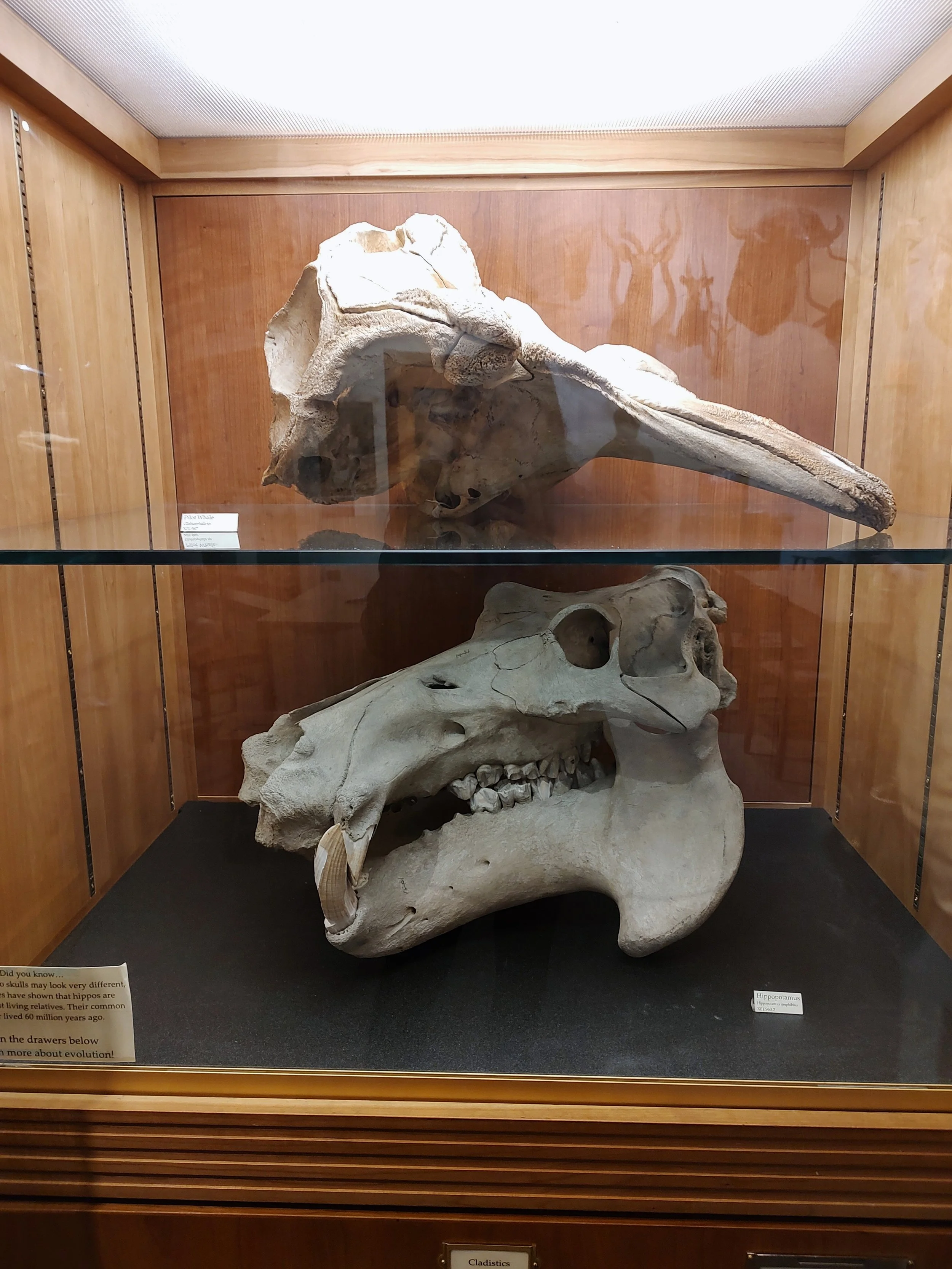
In an adjoining room, the museum had an extensive fossil collection that I spent the better part of an hour combing through. I learned that hippopotamuses are the closest living relatives to whales, sharing a common ancestor 60 million years ago. Opening a drawer under a large alligator skull informed me that amphibians are older than reptiles, existing around 360 million years ago, while reptiles were first discovered to live around 320 million years ago. On my way to the cafeteria, I spotted an Ichthyosaur skeleton on the wall, a marine reptile that lived at the same time as early dinosaurs, including the plesiosaur, with which I am well-acquainted from my research into America’s Loch Ness Monster, Champ.
It might be silly to say, but I felt validated by visiting the museum. 5 year old me was right to think dinosaurs were cool, and 16 year old me was right to be in awe of the cosmos. I never thought it was weird or lame to be interested in these things, but it was nice to see spaces dedicated to caring about them as much as I once did, and when I saw a little boy excitingly pointing out the animals he recognized in the fossil displays, I got excited too. Despite the passage of time and my shifting interests, I'm grateful that my commitment to curiosity never changed.